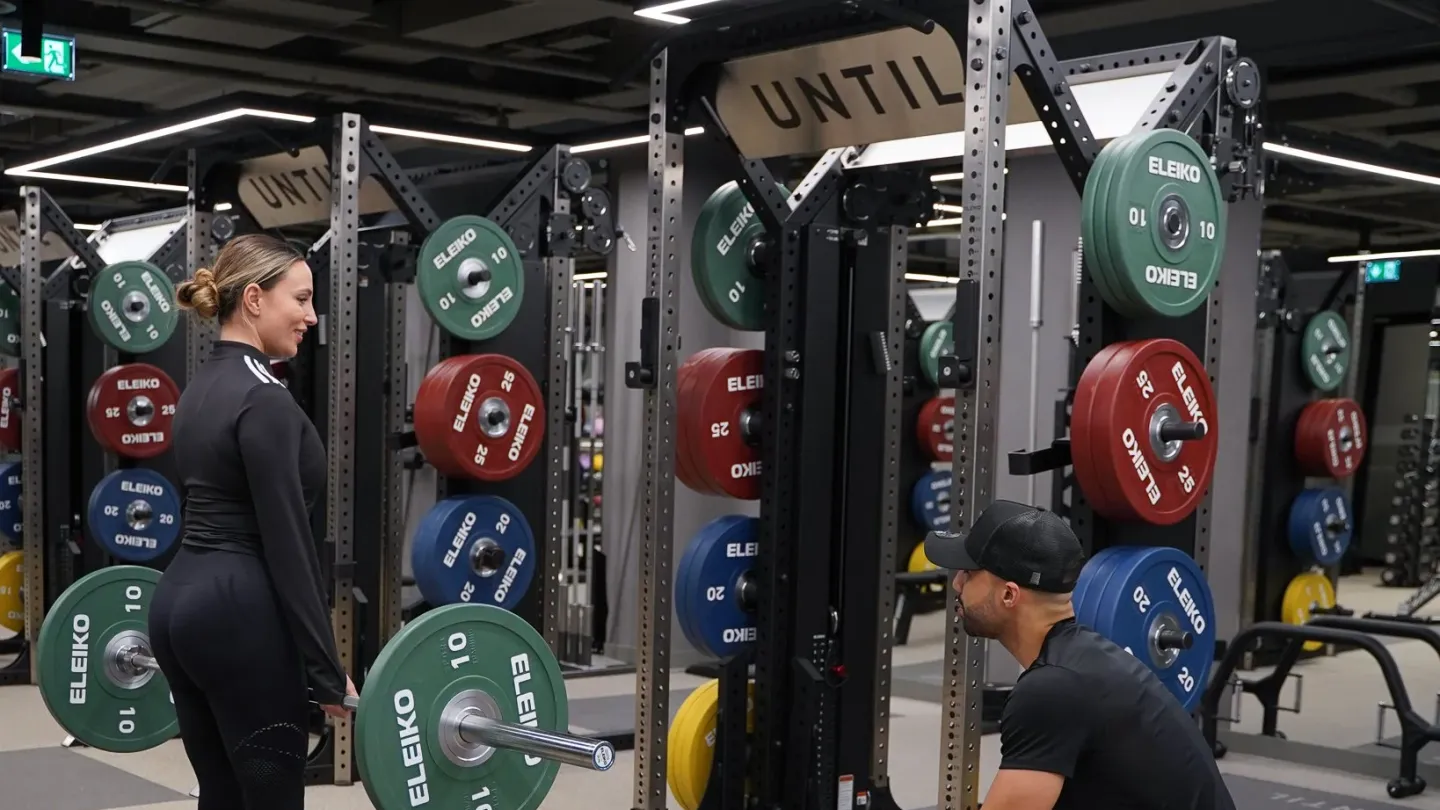
What Does a Performance Coach Actually Do?
A performance coach manages the whole system behind how you perform: training, nutrition, sleep, and recovery, pointed at a defined outcome. Here is what the job involves and when it is worth paying for.

In this article
A performance coach manages the system behind how you perform: training, nutrition, sleep, and recovery, built into one plan and pointed at a defined outcome. The visible part is the session. The actual job is the assessment before it, the programming around it, and the reviews that decide what happens next. If a personal trainer coaches your hour, a performance coach manages your week.
The job, in order
Performance coaching is a sequence, and the order is the point.
First, assessment. Before anything is prescribed, a serious coach measures where you are: movement quality, strength, body composition, and the lifestyle around your training. Second, definition: what does performing well actually mean for you? A faster 10k, a harder pre-season, or simply holding energy through a sixty-hour week are different targets that need different programmes. Third, programming: the plan that connects the two, sequenced in blocks rather than improvised session by session. Fourth, review: check-ins that compare what you did against the plan, so the programme adjusts on evidence.
That loop, assess, programme, train, review, is the whole discipline. Everything else is delivery detail.
Performance coach vs personal trainer
The titles blur, and plenty of good trainers do both jobs. The practical difference is what sits inside the service. A standard personal trainer is chiefly responsible for your sessions. A performance coach is also responsible for the load across your week, the recovery that pays for it, and the habits, sleep and nutrition first, that decide whether the training compounds.
Background matters more than the label. Strength and conditioning is a degree-level discipline with its own professional body, the UK Strength and Conditioning Association, and coaches who have worked in professional sport have had their programming tested against outcomes that get people dropped when they are wrong. Ask any prospective coach where their method comes from and what they measure. A confident answer to both is a good sign.
Do you need one if you are not an athlete?
The athlete framing undersells who this is for. The UK Chief Medical Officers’ guidelines set the floor for everyone: strength work at least twice a week alongside regular aerobic activity. A performance coach is how busy people clear that floor and then keep climbing, because the plan is built around a real diary and reviewed when life interferes.
In practice, most performance coaching clients are executives and professionals whose demands are cognitive and calendar-shaped rather than sporting. The currency they train for is energy, strength, and the confidence of a body that keeps up. The method does not change; the definition of performing well does.
What it looks like at WA Performance
Will Agbo’s background is the textbook version of the discipline: a BSc in Strength & Conditioning from St Mary’s University, Twickenham, then strength and conditioning work at QPR FC before founding a private practice. Every client starts with an assessment, and coaching is delivered 1-2-1 in Marylebone and Mayfair, hybrid, or online, depending on how much in-person time your week allows. The outcome is defined with you at the start, and the programme is reviewed against it for as long as you train.
Frequently asked questions
What does a performance coach do?
A performance coach assesses where you are, defines what performing well means for you, then manages training, nutrition, sleep, and recovery as one system pointed at that outcome. The work is programming, reviewing, and adjusting on evidence, not just supervising sessions in the gym.
What is the difference between a performance coach and a personal trainer?
The overlap is large, and the difference is scope. A personal trainer primarily coaches your sessions. A performance coach also manages the system around them, recovery, sleep, nutrition, and load across the week, and measures progress against a defined outcome rather than session by session.
Do I need to be an athlete to work with a performance coach?
No. The same method serves anyone with a demanding life: assess, programme, train, review. Most performance coaching clients are professionals who want more energy and capacity for work, family, and sport, not competitive athletes. The outcome is defined by your life, not a fixture list.
How much does a performance coach cost in London?
It varies widely with format and frequency, and many coaches quote after an assessment because the programme is built around you. At WA Performance, coaching is priced on enquiry. Email info@waperformance.co.uk and Will will talk through structure and cost before anything is agreed.